

What Infertility Taught Me about Strength
In honor of National Infertility Awareness Week, I'm sharing my story.
It’s National Infertility Awareness Week. So, to stand in solidarity with other families who have been affected by infertility, I’m sharing my story. If you wish to skip this read because this topic is sensitive to you or if you’re completely uninterested, I understand. I’ll be back to fitness-related content in the next article.

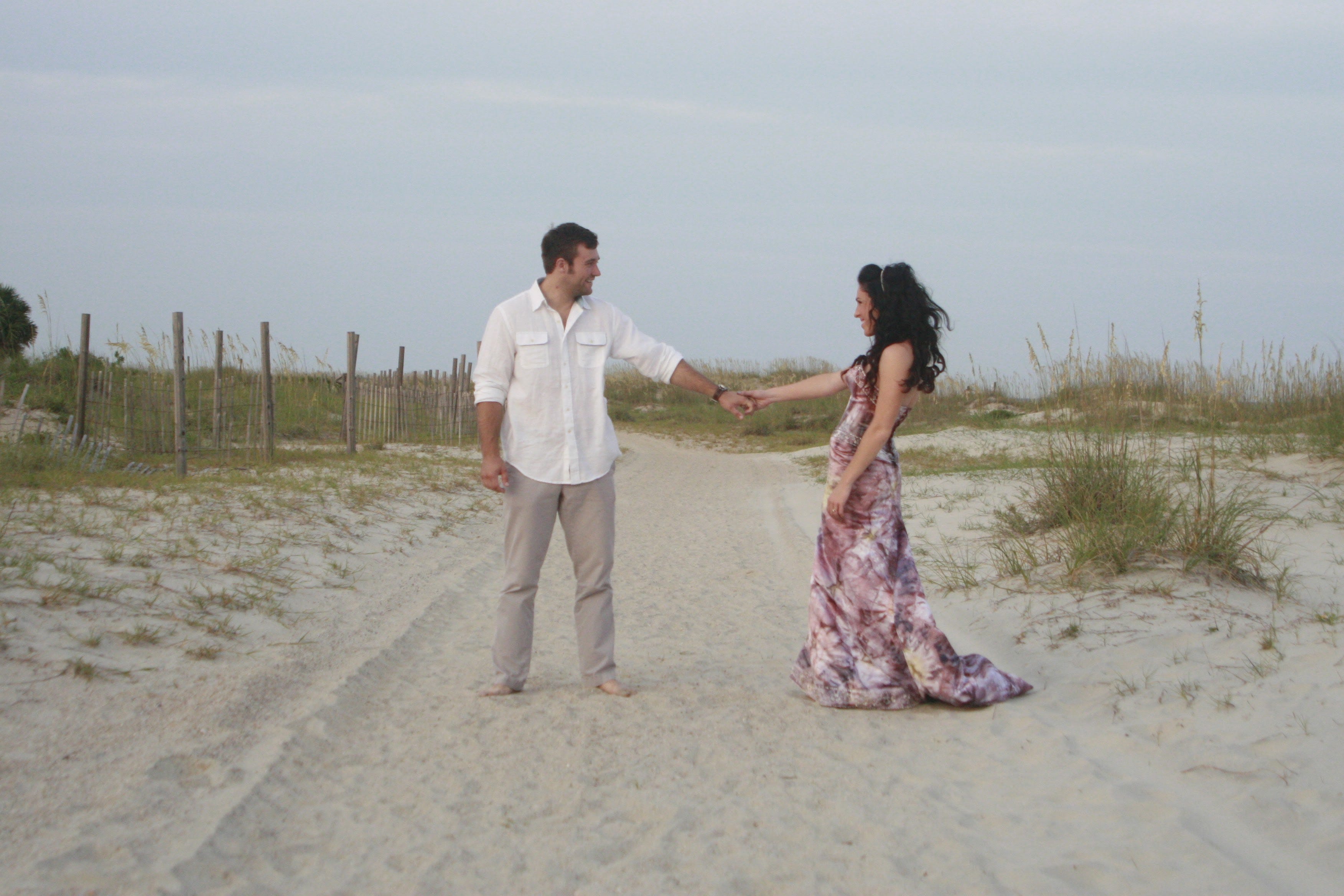
My husband and I eloped on Tybee Island, a quaint little beach outside of Savannah, Georgia, in 2014. A couple days before we left, we told a few family members in case they wanted to come, but were mostly glad to have a low-key ceremony that was meaningful - without all the frills. Plus, we were young, had relatively new careers, and were pinching every penny possible to pay off our debt (if only we knew what financial “fun” awaited….)
The Diagnosis
We both knew that we wanted a family, but continued to focus on work in the hopes of paying off student loans before a baby entered the mix. A couple years later, we felt like we were in a better spot, and decided to start trying. After a year with no success, we decided to consult a reproductive endocrinologist. I used to be a really optimistic person, but if I’m honest, that year of no progress started to foster a deeper belief that something was wrong. Intuition rarely lies, and mine was about to be proven right.
Armed with recent lab work and the fleeting hope the doctor would tell me it would be an easy case, we went to the consultation. She took one look at the labs I brought with me and in less than a minute looked up and said, “We’d need an ultrasound for absolute confirmation, but based on these labs, you have PCOS”.
PCOS, polycystic ovary syndrome, is a hormonal condition that typically presents with irregular cycles, weight gain, insulin resistance and higher levels of androgens. Aside from the first symptom, I was shocked. I’ve always been a relatively lean, athletic build so I didn’t fit the rest of the “type”. However, I then learned there’s a smaller subset of women that have lean PCOS. This group still struggles with cycle irregularity and hormonal imbalance, but aren’t insulin resistant or overweight.
The follow up ultrasound confirmed the PCOS, and we were presented with treatment options to pursue: medications to force ovulation or pursue IVF. We’d also considered adoption but knew there were ethical dilemmas with agencies, fees, and so many unknowns. However, we still made a profile that many of our friends shared in the hopes we could match independently. I was also simultaneously reading blogs, watching YouTube videos, and reading Reddit threads on infertility to see if there was any route to parenthood we hadn’t considered, when I got a call from a friend.
Friend: “Okay, this is going to sound crazy. My friend is pregnant, but get this: the baby she is carrying is not her own biological baby. She’s not a surrogate, either. She used someone else’s embryo to get pregnant and she will get to birth and keep the baby.”
Me: “I’m sorry. WHAT.”
Friend: “I know I’m not explaining it well. I’ll ask her what it’s called, but it may be something else to think about.”
Me: “…..okay.”
Embryo Donation
What she was referring to, but neither of us knew, was embryo donation. When couples go through in-vitro fertilization, they often have additional embryos they are unable to use. Not every embryo results in a successful pregnancy or a live birth, so having more than you need is helpful as couples work to complete their family. Even still, once families are done growing their family, they often have leftover embryos. These embryos can be frozen (for as long as you pay storage fees), donated to science, destroyed, or donated to others.
For us, it was essentially adoption in the earliest form, and we didn’t hesitate to pursue this avenue. IVF is quite expensive because most insurance plans won’t cover infertility treatments. Plus, it can also be taxing on the body. With embryo donation, I could avoid the egg retrieval process because the embryos were already made. I just needed to go through the embryo transfer. Less expensive than IVF and easy enough to complete.
Embryos can be donated anonymously or directly. Most fertility clinics have embryos available for anonymous donation (with an extensive waitlist). They typically tell you ethnicity, hair color, eye color, and any family history of known disease. Direct donation or known donation is facilitated directly by the donating couple or individual. They then get to choose exactly who to give the embryos to, and can decide the openness of the relationship.
We knew embryo donation was right for us. Next, we got on our clinic’s waitlist (although we weren’t thrilled about the anonymous part) and were told it would be a year to a year and a half wait. We just didn’t know how else to go about finding embryos. Yet, I was still on my internet deep dive on all things infertility. We still had an adoption profile “out there” and were now also on my clinic’s wait-list for embryos.
I subsequently discovered Facebook groups for embryo donation and joined as many as I could find. Within these groups, couples wishing to receive embryos as well as couples wanting to donate embryos can make profiles and connect independently. I posted our profile there and added that to our mix of hopeful outcomes.
All the things. All at once.
Around 4 months after getting on the waitlist, I was contacted on Facebook by a woman who was pregnant and claimed that she wanted to place her baby for adoption. I cautiously began talking to her via Messenger and allowed her to talk and share when she felt like it. She was not too much younger than I was at the time, and already had two kids. A third was too much, she told me.
As time went on, she mentioned wanting to chat on the phone, so I give her my number. She called me often. Each week she called me, shared what was going on in her life, told me about her doctor’s appointments, and how she was feeling. The time came for her 20 week scan and she asked if I wanted to come to the appointment with her and learn the gender of the baby.
Since she didn’t live too far from me, it wasn’t a long trip and I was happy to go. Together we learned it was a girl, and that everything appeared to be right on track. After the appointment, Austin and I took her to lunch, then headed back home. Once we got back home, we contacted an attorney to talk about what the legal process would consist of.
Meanwhile, as her pregnancy progressed, I’m contacted by our clinic to come by and review the list of embryos they have available. Nearly a year later, we finally made it to the top of the list. Again, despite the adoption continuing to feel like a very real possibility, we were still cautious. So, I began appointments for ultrasounds, lab work and all the medications - which felt like a part time job to maintain the schedule and medication administration. (Giving yourself daily injections with a gigantic needle for 6+ weeks definitely makes you feel tough.)
A few months later, the embryo transfer was a success! I’m not a very patient person and I don’t love surprises, so after my home pregnancy test was positive, the lab confirmation was a formality. However, when I went in for my 6 week ultrasound, we learned there was no heartbeat. The shock and devastation were palpable. I was heartbroken, but held a sliver of hope since adoption was still on the table.
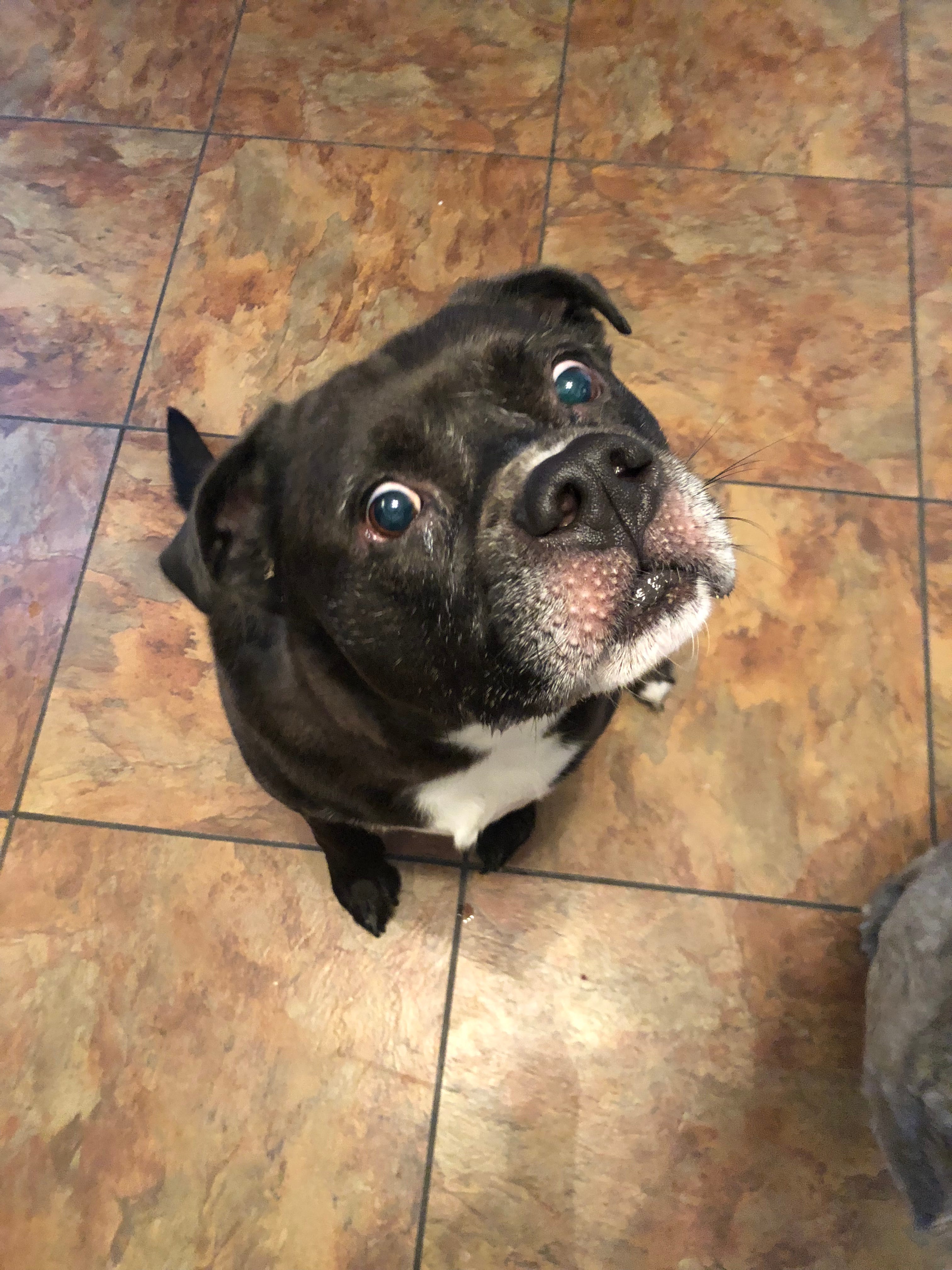
Unrelated to my health, but to help grant context to the sadness of this time: a few weeks later we had to euthanize our dog, Jasper. He was my sidekick before I met Austin and had been with me through a tough season - well, a different kind of tough - prior to this one.
Late one night, as Austin and I are watching TV, I’m scrolling Facebook and see a message come through from the potential adoptive mom. It’s a picture of a baby. THE baby, with a message saying, “I think I’m going to keep her. Sorry.” I slammed the computer shut and sobbed. We were past the point of a little boo-hoo; it was full body catharsis via tears. Weeping with every fiber of my being, I wanted to give up.
Looking back, I’m not sure if she knew all along she was going to parent, but I do feel I was likely an emotional support for someone who had none. I was a friend, a confidant, and a voice of reason for her. And if that was the reason why she came into my life - to help get her to that point, that’s okay.
I believe that babies should stay with their moms/families if at all possible. I want to be clear here that my sadness came from the continuous streak of failure - both of my journey and of my body. It was 100% the best possible outcome for the baby and for her to choose to parent. I will support that decision every time.
P.S. all of this happened in year 2 of my doctorate.
Our profile in the embryo donation Facebook group was still active. A few months later, after the dust had settled, we were contacted by a family who had 2 embryos they were wanting to donate. We clicked with them, graciously accepted their offer, and had the embryos shipped to our clinic so we could begin another embryo transfer.
Between the failed adoption and the first failed embryo transfer, we had already lost so much money - money that we didn’t have to start with. Remember how I said as newlyweds we were paying off all our debt? Well, now we were back in the debt accrual game. Looking back on it now, I have no clue what possessed me to keep trying. The desperation to become a mom (for women who feel that calling) can carrying you past your breaking point, apparently.
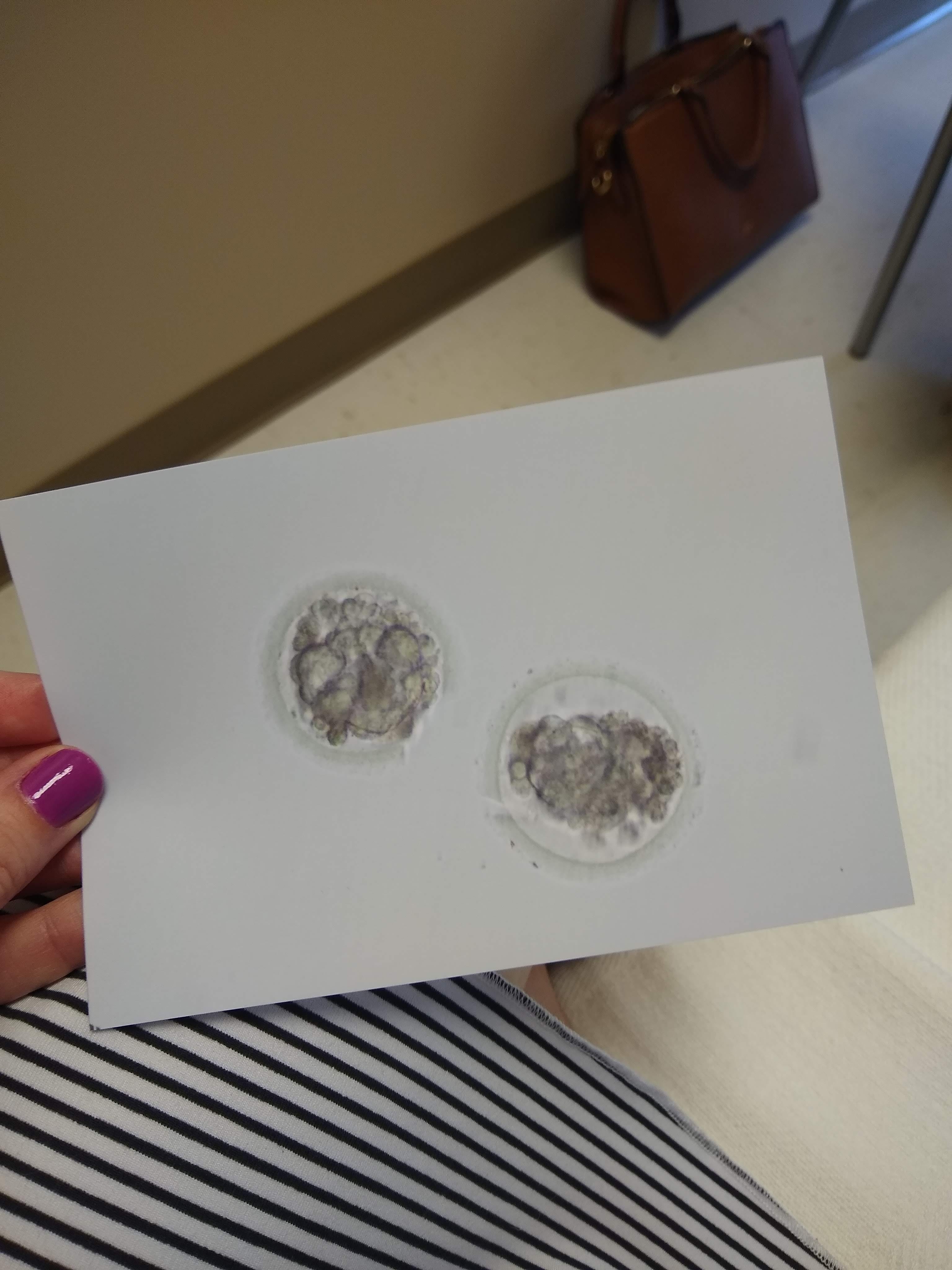
On the morning of the embryo transfer, they begin to thaw your frozen embryos. The two that were donated to us were frozen in the same "straw”, so the plan was to thaw, use one, and refreeze the other for later. Before the procedure, our doctor came out to tell us that one of the embryos wasn’t looking good and it would not survive another freeze cycle. Because I was healthy and because the chances were slim (<10%) that it would implant, she said she would transfer them both.
Same as before: home test was positive, blood work looked great, and we went in for the ultrasound trying not to hold our breath. She begins the ultrasound and says, “Hmmm…” which is exactly what she said the last time, so I braced for impact.
She then says, “Well, guys, it looks like they both worked!”
Austin then asks: “Can they still split?!” She assured him they could not, and we left the appointment, sat in our car and laughed hysterically, and then went out for breakfast.
The really unfortunate thing about infertility, is you can never truly be excited, because you’re always waiting for the other shoe to drop. The entire pregnancy I was scared to death something would go wrong. For the most part, it was smooth sailing. I fully believe God has a sense of humor because I was due at the time I was set to complete my dissertation and defense.
Around 28 weeks, my high risk doctor (the absolute best) noticed that Baby B’s growth was discordant. By week 31, I had to go check myself into the high risk perinatal unit of the hospital for around the clock monitoring. I made good use of my forced bedrest and finished my dissertation in between NSTs and daily ultrasounds.
Ten days later, my blood pressure spiked, pre-eclampsia was confirmed, and they waited until the last. possible. second at 32+3 to take the babies as HELLP was setting in. If you’ve ever had a magnesium drip, you know how absolutely miserable you feel, but thank God in my delusion, I still remember them showing me those tiny, precious babies before they took them to the NICU.
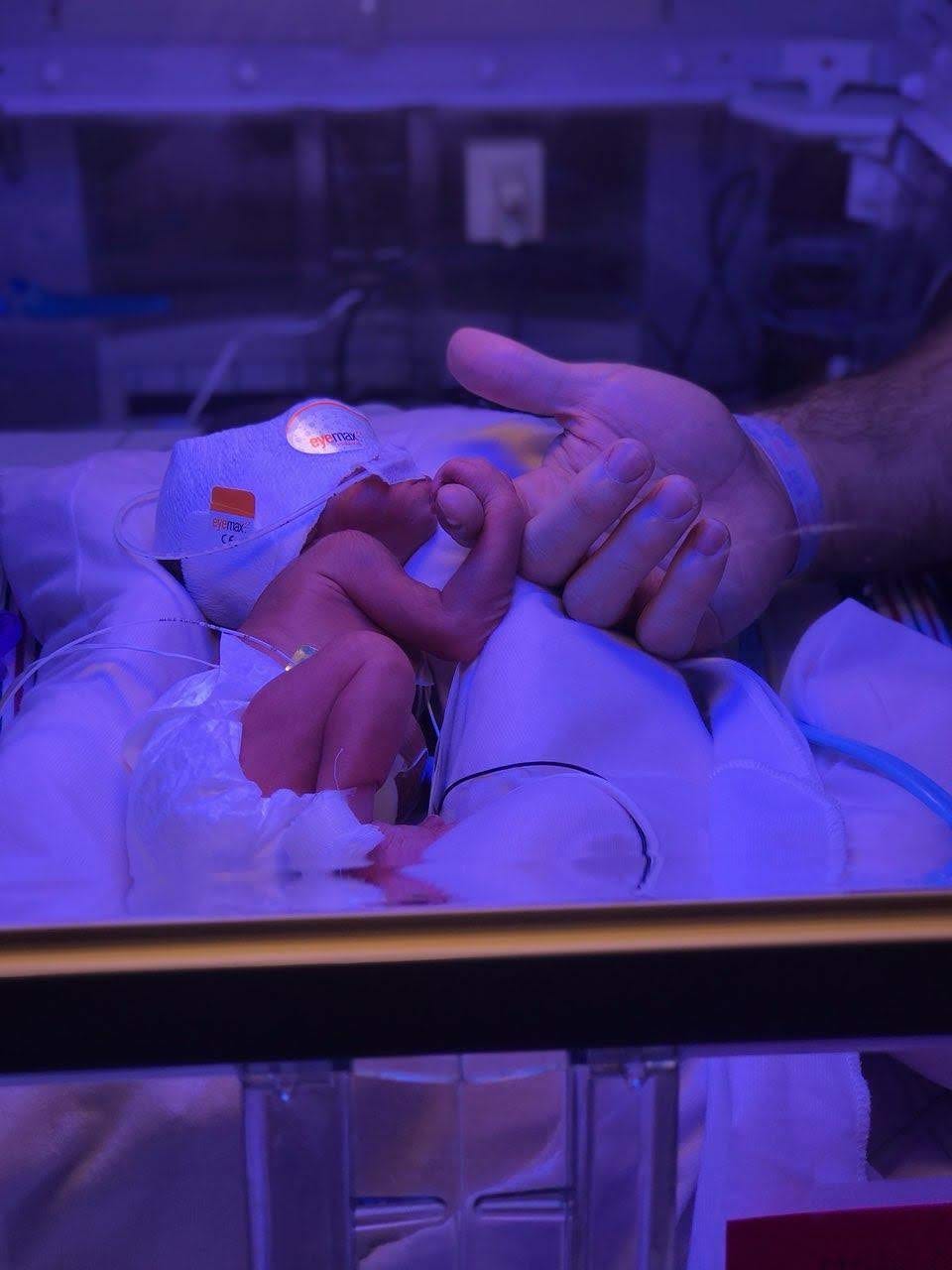
The NICU is a sacred space - filled with loss and light. I will never be able to accurately convey what it feels like to be surrounded by tiny humans who are fighting so deeply, with everything they have to stay earthside with those who love them.
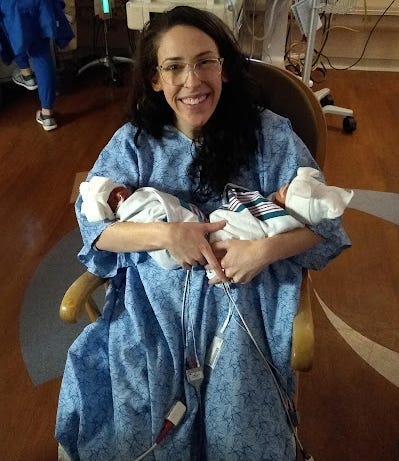
The twins grew and grew, as the neonatologists and pediatricians assured us they would. And we grew too, as parents. What we once thought was impossible (caring for twin babies), felt possible - so possible, that we felt like we wanted to have another. Our twins are biracial, and we wanted a subsequent child to have the same racial identity as our twins. But, that felt like finding a needle in a haystack.
Still, we persisted, posted our profile again, and a few months later were contacted by another family who had embryos to donate that matched the racial background of our twins. I talked with the donating mom a few times, again, we clicked and after a bit of paperwork, the embryos were on their way to our clinic.
After the pre-eclampsia and near death experience with the twins, needless to say I was a tad nervous, but the pregnancy with our third was a dream. We scheduled her c-section, it was calm, uneventful (in the best way) with no NICU time. It was wild to take a baby home from the hospital the next day. She was perfectly healthy, precious, and the best ending to the longest 8 years of my life.
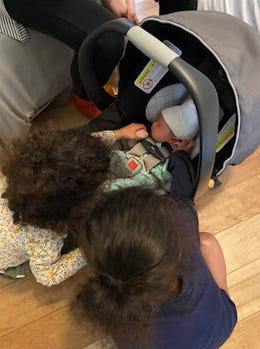
All our kids know their story. None of this would have been possible if we had an anonymous donation. I can’t fully grasp the magnitude of the gift we have been given through embryo donation, but the depths of it will never be lost on me.
It’s also one of the reasons I periodically share my story. It’s a reminder to me of the goodness that still exists in the world: that someone would so graciously give a gift they fought so hard for, so that others can experience the joy of parenthood. I guess that’s where the strength lies. The shared, collective experience (that no one would wish on another) is the thing that somehow holds us all together.
I still often wonder what our biological child would have been like. I also still think about the baby that I lost, every year on it’s would be due date. That’s the thing about infertility. It’s indescribable joy for what I have and deep loss for what could have been. Both can exist without one taking away from the other.
If someone had told me at the beginning of my journey that my story would turn out this way, I’d never had believed them. I guess that’s a good thing. I needed to experience it for myself to see that it was better than I could have imagined.
Simply Fit is a free newsletter that aims to help you simplify your fitness routine so you can make movement a regular part of your daily life. Subscribe below to receive science-backed fitness content. Thanks for reading!
This is definitely my favorite post yet. I love our family.